Choose finishes around the way you use each space
Custom furniture finishes should suit both the look and the way a space is used. Before choosing a color, consider who will use the furniture, how it will be cleaned, and where it may be exposed to heat or moisture. These details help guide your choice of surfaces and project features.
A kitchen is exposed to grease, steam, and frequent cleaning. A walk-in closet needs organized clothing and easy access to storage. A living-room wall panel calls for attention to the overall look, cable routing, and access to equipment.
Write a short description of how each room is used. Include what you need to store, how often the space is used, and what kind of care is realistic for you. A finish works best when it fits everyday life.
- Kitchen: food preparation, cleaning, appliances, and areas near water.
- Bathroom: splashes, ventilation, and nearby plumbing.
- Bedroom and closet: organization, access, and everyday items.
- Living room and home office: natural light, equipment, cables, and frequency of use.
If you are at an early stage, the custom furniture quote checklist can help you bring these details to your first conversation.
Compare colors and textures using physical samples
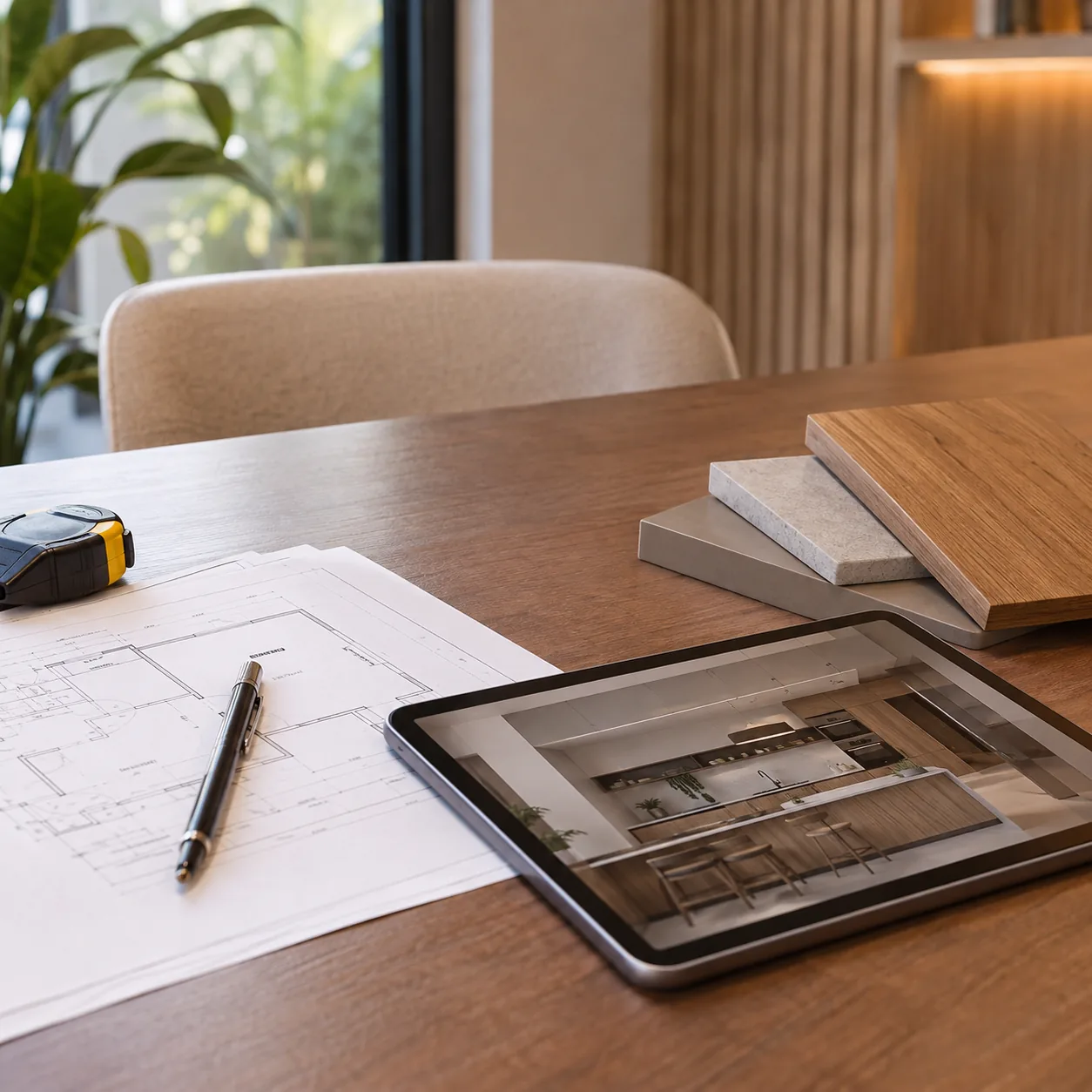
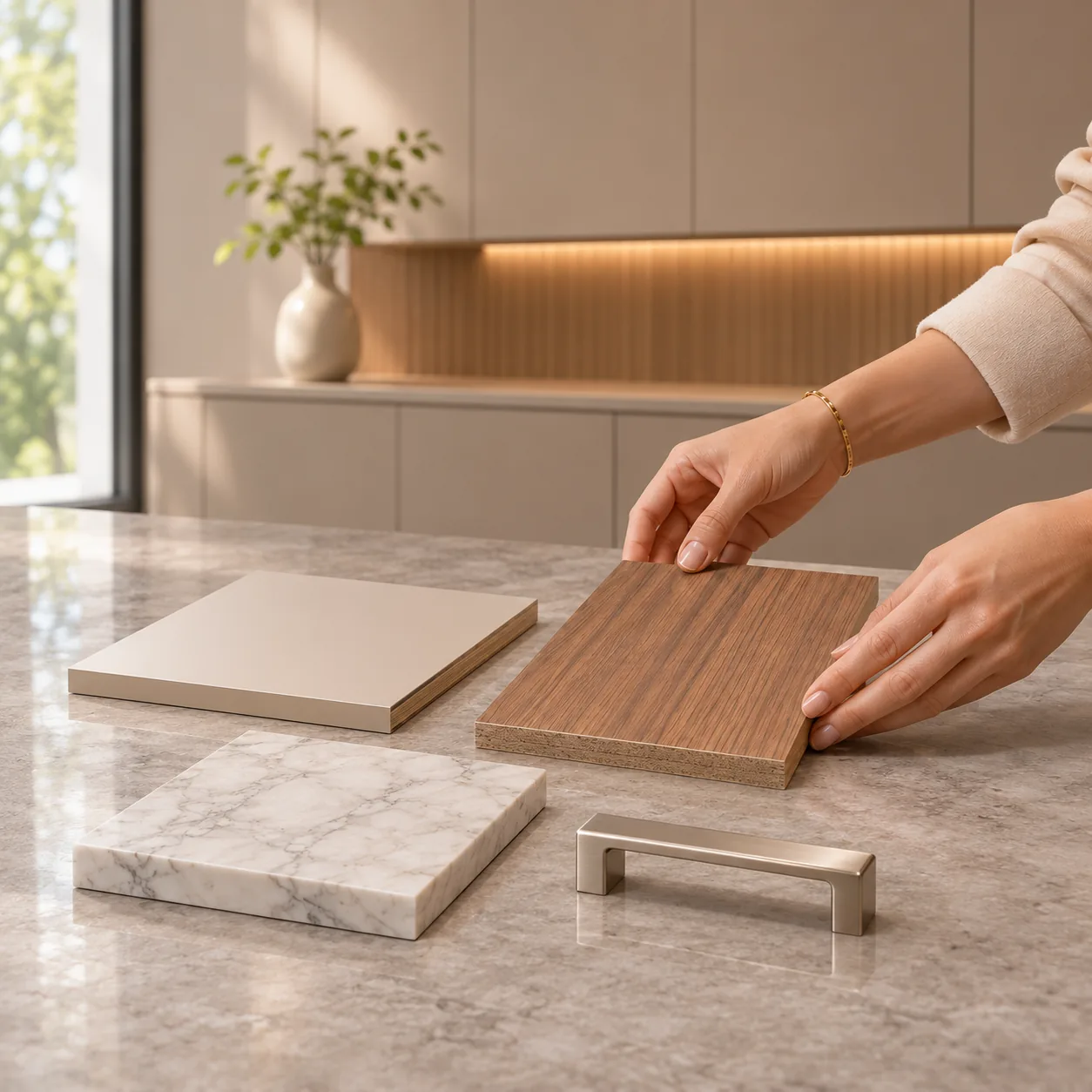
Review a custom furniture finish in the room where it will be used. A phone screen is useful for collecting ideas, but it cannot replace seeing a sample in person. Daylight, artificial lighting, and nearby materials all affect how the combination looks.
Place samples next to the floor, wall, and planned countertop. Look at how they work together. You do not need to repeat exactly the same color on every surface to create a cohesive feel.
Exemplo prático: a woodgrain finish may look subtle in a photo but much bolder next to a strongly patterned floor. Seeing samples together helps you decide which material should stand out and which should play a quieter role.
Distinguish the surface pattern from the material used to build the furniture. MDF is an engineered wood-fibre panel; a woodgrain pattern describes its appearance. The specification should identify the panel, surface finish, edges, and other components.
Check the sample’s feel, light reflection, and how visible everyday marks may be. Results vary by product. Do not choose based only on a finish name or a broad claim about durability.
Consider moisture, heat, and sunlight
Material specifications should account for the conditions in each room. Mention recurring splashes, direct sunlight, heat-producing appliances, or any history of leaks. Different areas of the same home may need different considerations.
Do not use furniture to cover up a moisture problem. If there is a leak or water ingress, ask the appropriate professional to assess it before installation. Choosing a different panel does not fix the source of the problem.
ARAUCO describes its moisture-resistant MDF as an option with greater resistance to humidity. This does not make any piece of furniture waterproof. Check the technical data, intended application, and use conditions of the specified product.
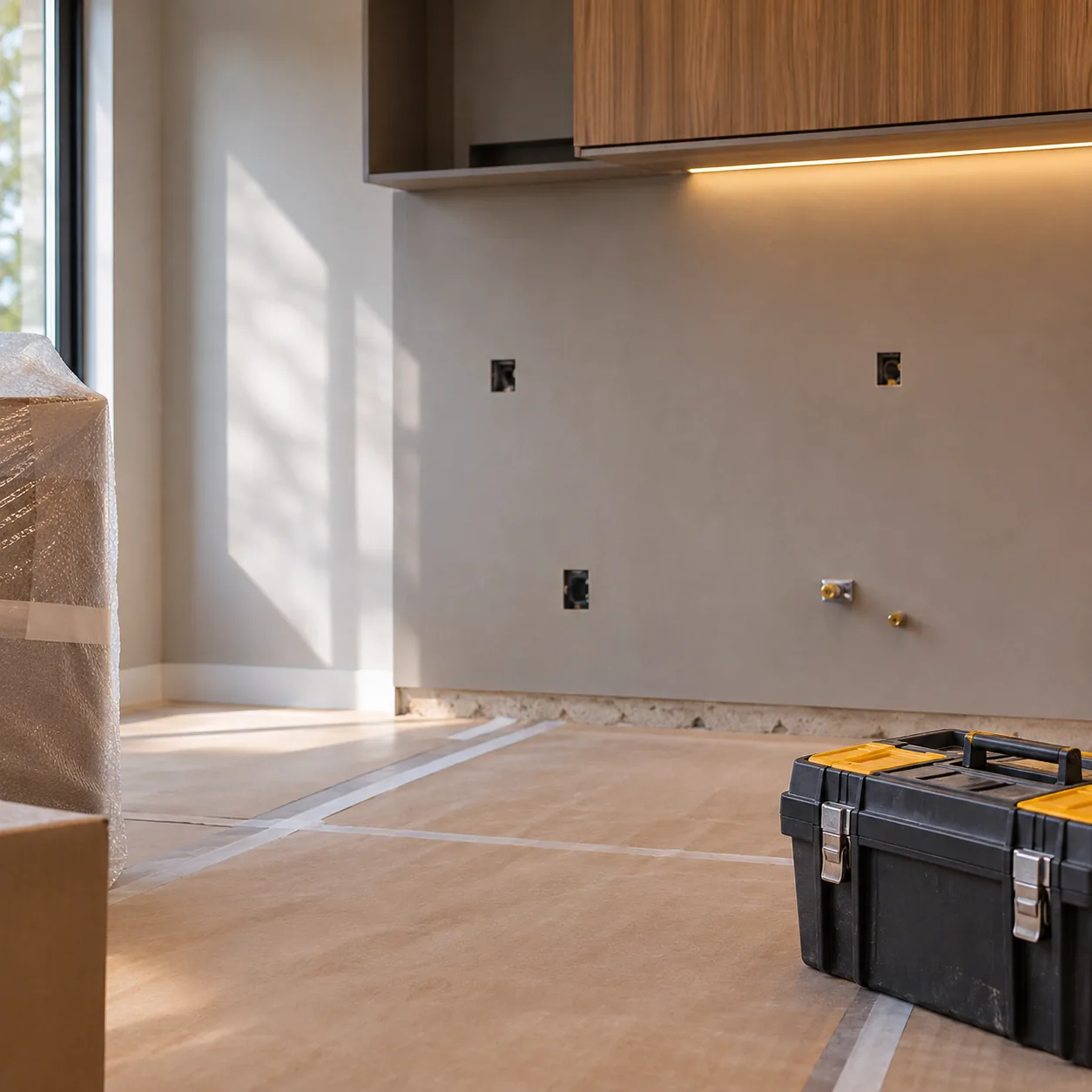
In areas with appliances, follow the manufacturer’s installation requirements. Openings, clearances, and ventilation should not be based on appearance alone. If an appliance changes during the project, share its new manual for review.
Exemplo prático: a cabinet beneath a sink needs to account for the basin, plumbing trap, and maintenance access. A beautiful door cannot solve an interior layout that makes the space hard to use.
Edges and hardware are part of the finished result
When reviewing custom furniture finishes, look closely at edges and moving parts. Edge bands, joints, and opening systems affect both the appearance and function of the whole piece.
Check what the proposal specifies for doors and drawers. Confirm the opening style, access, required clearance, and interior accessories. A brand name alone does not describe the complete system.
Blum provides specific installation and adjustment guidance for its hardware. This resource underscores the importance of following the documentation for the selected system. It does not recommend a particular brand or imply that a project will use this supplier.
Ask for a demonstration if possible. Open a door, pull out a drawer, and check the hand clearance. Seeing how it works makes it easier to judge than a photo alone.
- Check door swings near walls and other furniture.
- Make sure handles and access work for the people who will use the furniture.
- Discuss what you plan to store before deciding on interior dividers.
- Record approved hardware systems along with the other materials.
Consider cleaning and care before you approve
Choose materials with care requirements you understand and can follow. Before approving them, ask which cleaning products are suitable, how to handle spills, and what restrictions apply. There is no single care routine for every finish.
A ARAUCO’s MDF cleaning guidance advises care with excess moisture and cleaning products. For your furniture, follow the guide for the specified finish and the instructions provided by the team.
Do not try a cleaning mixture just because it worked on another material. If a mark remains after following the recommended method, check the manufacturer’s guidance before using a stronger product. Hardware and surfaces may need different care.
At handover, keep the finish details and care instructions. If maintenance is needed, explain which part changed and how the room is used. Wide and close-up photos can help.
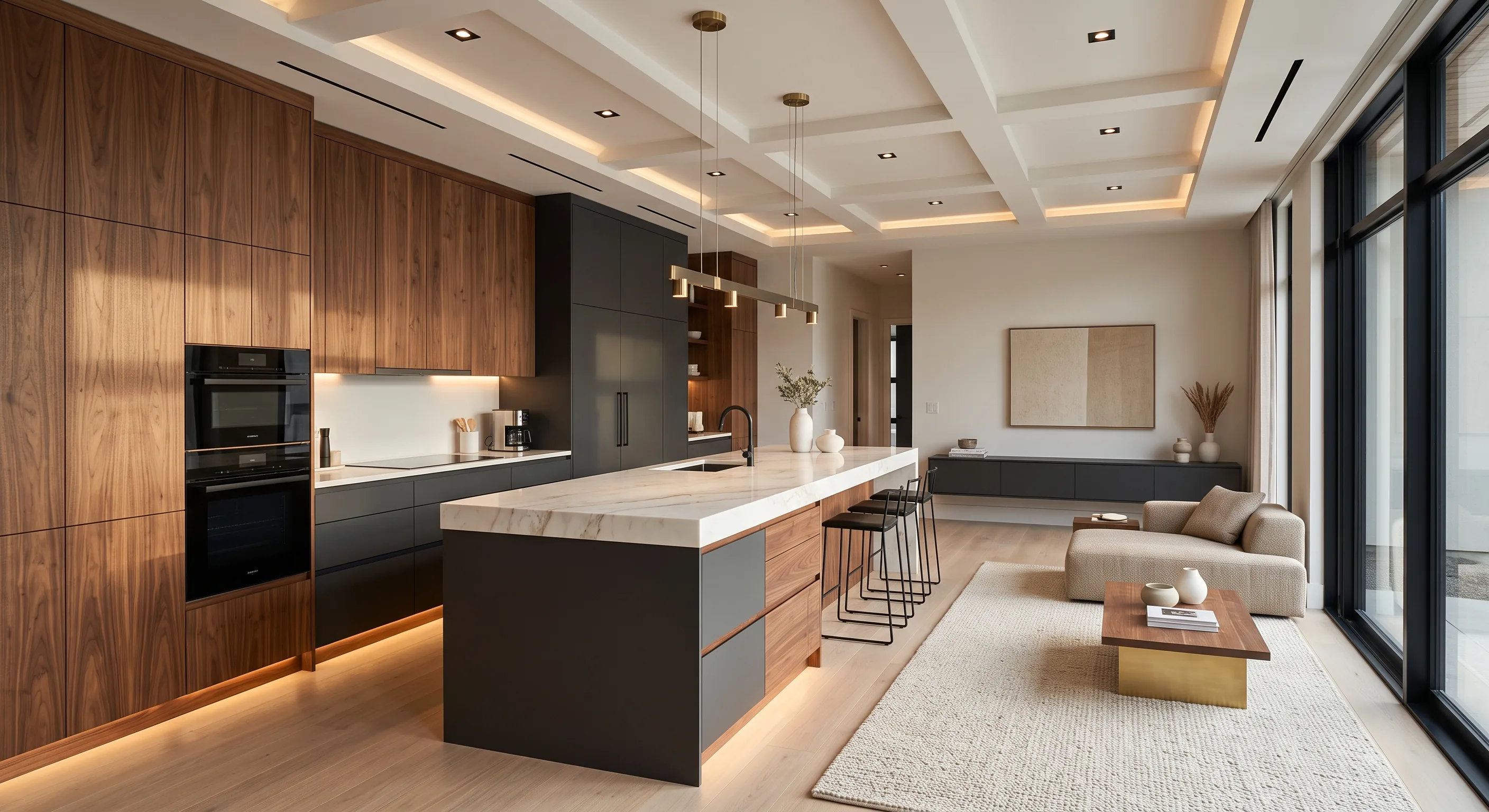
See the Kammers custom woodworking projects for inspiration. Use the images as a starting point to discuss proportions, materials, and storage, not as a technical specification.
Common questions about materials and finishes
Can moisture-resistant MDF get wet without special care?
Greater moisture resistance does not mean waterproof. Suitability depends on the product, room conditions, and construction. Leaks and water ingress need to be addressed, and the manufacturer’s care guidance still applies.
Can I choose a color based only on a photo?
A photo can indicate the style you want. Before approving a finish, view a sample with the other materials in the room, consider the lighting, and confirm the product code.
What should I ask before choosing a finish?
Ask where the material can be used, how to clean it, and what is specified for edges and hardware. Bring your references and routine to the conversation. Choosing a finish is easier when appearance and function are considered together.
Share this guide